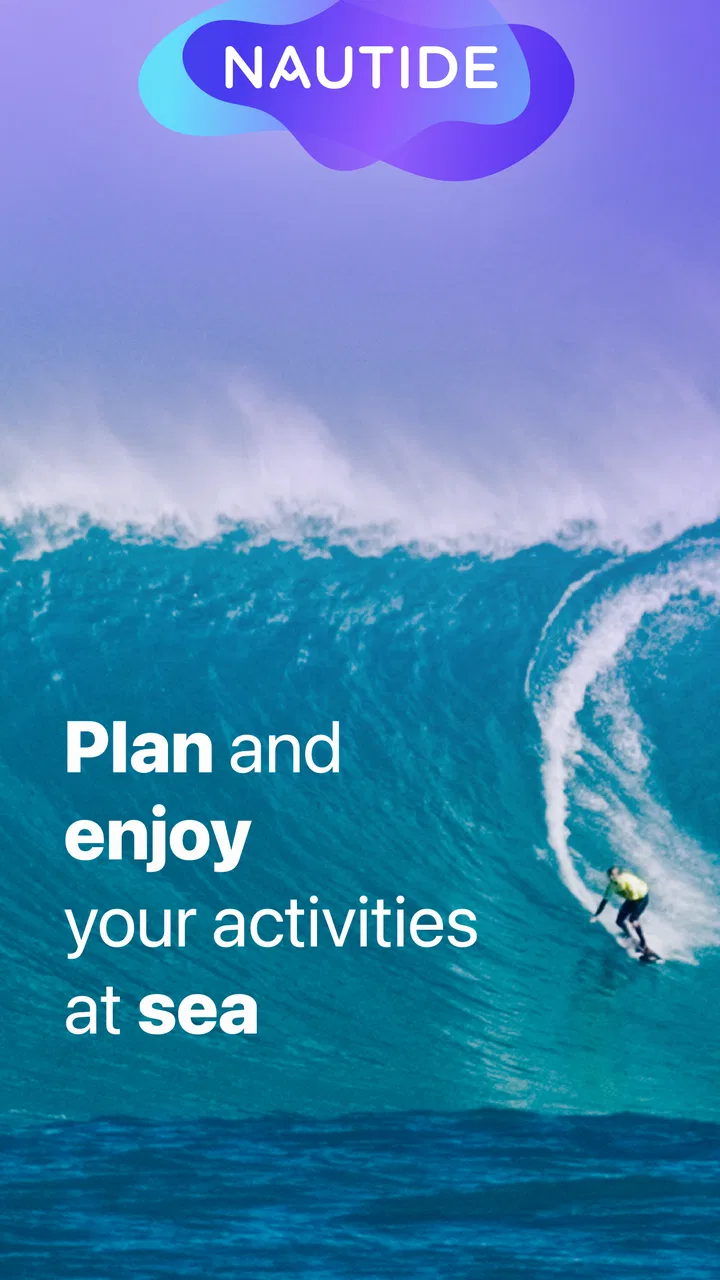
Nautide: Tides, Wind, Waves +
- 4.3
- Rating
- 1.00M
- Installs
- Free
- Price

 Analysis by App-foxy
Planning time on the water is different from checking whether it might rain in town. A pleasant-looking forecast can still hide a difficult tide, uncomfortable wind, or waves that make a simple outing far less enjoyable. Nautide: Tides, Wind, Waves + is built for that gap. It is a free weather app from Igoox focused on marine conditions and activities such as surfing, fishing, sailing, diving, and kayaking.
I found its appeal quite clear: instead of treating the sea as an afterthought in a general weather app, it puts the information that matters around the shoreline in one place. That makes it more useful for deciding when to go, when to wait, and when a planned activity needs changing. It is not a replacement for good local judgement, but it can make preparation much more deliberate.
What Nautide is really useful for
The app belongs to the weather category, but its practical role is closer to a marine planning companion. A standard weather app usually answers questions about air temperature, rain, and perhaps wind. Nautide is aimed at the questions that begin once you reach the coast: how the tide is moving, whether the wind supports the activity, and whether wave conditions fit the plan.
You May Also Like

 Blood Strike: 2.5 Anniversary
Blood Strike’s Loadouts Turn Every Drop Into a Tactical Gamble
A close look at Blood Strike’s custom loadouts: how fast access to signature weapons reshapes its battle royale rhythm, rewards preparation, and narrows the gap between fights.

 Pandora - Music & Podcasts
Pandora’s Music Is Easy to Start, but Harder to Recover
Pandora’s strength is its low-effort path from a seed to a station. Its weak spot is how much confidence it asks you to place in connection, setup, and quiet recovery.

 8 Ball Pool
 Is Built on Rivalries, Rematches, and Routine
A close look at the rivalries, rematches, shared routines, and unanswered safety questions that turn a quick pool match into a persistent mobile community.

 Samsung Music
’s Quiet Strength Is Playing What You Already Own
Its reach comes less from spectacle than from dependable access to a personal library. That simplicity is both the app’s strongest retention engine and its ceiling.

 AccuWeather: Weather Radar
AccuWeather Review: A Quick, Clear Forecast for Everyday Decisions
For everyday plans, the best forecast is the one you can understand quickly. AccuWeather makes rain timing, radar, and local conditions easy to act on, with a few trade-offs.

 Hill Climb Racing
Why Hill Climb Racing Still Turns Crashes Into One More Run
A tiny car, a bumpy hill and one more upgrade: Hill Climb Racing keeps resurfacing because its simple chaos makes every near-miss feel personal.
More From Our News Desk



That focus matters because different water activities need different conditions. A kayaker may care about manageable wind and a comfortable return route. A surfer may be more interested in wave behavior than in whether the afternoon is warm. Someone fishing from shore may use tide timing as part of deciding when to arrive, while a diver needs to think about water movement and visibility alongside the ordinary forecast.
I also like that the app is not trying to be a general-purpose weather dashboard with a nautical theme added on top. Its identity is specific. If your time outdoors is regularly shaped by tides and coastal conditions, that specialization is the main reason to consider it.
Starting with the free access
Nautide is free to download and use as an entry point, so you can test whether its approach fits your routine before spending anything. That is important here because a marine forecast app only becomes genuinely useful when it matches the places you visit and the way you plan. A few minutes of exploration can tell you much more than a store description.
The app includes in-app purchases priced from $5.49 to $39.99 per item. I would treat those purchases as an optional commitment rather than part of the basic decision to install it. The free starting point lets you judge the workflow first; the paid value depends on whether the additional access or capability is relevant to your own coastal habits.
In other words, I would not install it assuming that every useful part requires payment, but I also would not assume that the free experience automatically covers every advanced need. The sensible approach is to use the free layer for a real planning task, then decide whether the paid option solves a problem you actually have.
A practical routine before heading out
My preferred way to use a marine weather app is not to open it only when I am already standing beside the water. I would check the intended location before leaving, look at the tide situation, then compare that with the wind and wave picture. After that, I would revisit the forecast closer to departure, because a plan made the previous evening should not be treated as a guarantee.
For a casual kayak trip, this creates a useful three-stage decision. First, choose a location that suits the outing. Second, check whether the conditions support the planned route rather than merely looking for a sunny icon. Third, decide how flexible the schedule needs to be. If conditions look marginal, the answer might be a shorter route, a sheltered launch, or postponement.
This is one of the app’s more valuable qualities: it encourages you to think in terms of suitability, not just attractiveness. A warm, bright day is not automatically a good day on the water.
Why tide information changes the plan
Tides are easy to ignore when you are used to ordinary weather apps, yet they can affect access, timing, launch points, shallow areas, and the character of a coastal location. A fishing session planned around arriving at the wrong stage of the tide can feel poorly timed even when the rest of the forecast looks excellent.
I would use Nautide as a planning aid rather than a single source of truth. Tide information can help establish the broad timing of an outing, but local geography still matters. A beach, harbor, estuary, or rocky shoreline can respond differently to the same general tidal cycle. The app can improve the schedule; it cannot replace knowing the location.
A useful habit is to check the tide before choosing the duration of an activity. A short walk, a shore-fishing session, and a long paddle do not have the same tolerance for changing conditions. The longer you stay out, the more important it becomes to consider what the return journey will be like rather than focusing only on the launch.
Wind and waves need interpretation
Wind and waves are not just numbers to glance at and forget. Their effect depends on direction, exposure, shoreline shape, and the experience of the person using the water. A condition that feels manageable to an experienced sailor may be uncomfortable for a beginner in a small kayak.
That is where I think the app is most helpful as a decision-support tool, not as an automatic go-or-no-go button. I would compare the forecast with the specific activity and with the weakest member of the group. If children, beginners, or less confident participants are involved, the safe choice should be based on their margin for error.
For surfing, the wave picture may be central, but wind direction and timing still influence whether the session is enjoyable. For diving, surface conditions can affect entry and exit even when the underwater plan seems suitable. For sailing, a favorable wind forecast does not remove the need to think about the route, equipment, and changing conditions.
Three useful habits beyond the basic forecast
- Plan the return, not only the departure. I would check what conditions may be like when the activity ends, especially for kayaking or any trip that moves away from the launch point.
- Use the app to compare activities with the same day. A day that is unsuitable for a long paddle might still work for a sheltered coastal walk or a brief shore session, so the forecast can help reshape the plan instead of simply canceling it.
- Build a personal threshold over time. After several outings, I would note which combinations of wind, waves, and tide felt comfortable. That turns the app from a passive display into part of a more realistic personal planning method.
These habits are not special buttons or hidden modes that I would promise the app provides. They are ways to use its marine focus more intelligently. The value comes from connecting the information to a real decision.
How it compares with ordinary weather apps
A normal weather app remains the better choice if your main concern is commuting, gardening, city temperatures, or rain during a weekend walk. Those apps are usually quicker for broad daily weather and may feel less specialized when marine details are irrelevant.
Nautide makes more sense when the coastline is the destination rather than just the scenery. Its advantage is concentration: tides, wind, and waves are the information you are looking for, rather than details buried among unrelated weather cards. That can reduce the mental work involved in preparing for a water activity.
There is also a trade-off. A general weather app may be enough for someone who visits the beach occasionally and never plans around tides. Installing a specialized tool adds another source to check, and that is not automatically worthwhile for every user. I would choose Nautide when marine conditions regularly influence my plans, not simply because I like having another forecast installed.
Who will get the most from it
The strongest audience is made up of people who repeatedly spend time near or on the water. Surfers, anglers, sailors, divers, and kayakers can all find a clear reason to look at a marine-focused forecast before committing to a session. It may also suit coastal photographers, swimmers, paddleboarders, and families who want to choose a more comfortable time for a shoreline outing.
It is particularly useful for people who tend to make plans around narrow windows. If you only have a morning available for fishing or a short afternoon for kayaking, a focused view of coastal conditions can help you use that time more wisely. The app is also a reasonable starting point for newcomers who are learning which conditions matter to their chosen activity.
Experienced users may appreciate the convenience, but they should still bring their existing knowledge of local waters. A forecast cannot know your confidence level, equipment condition, launch difficulty, or how quickly a particular location becomes exposed. Nautide can support experience; it should not be used to imitate experience.
Who should probably skip it
I would skip it if I wanted only a simple temperature and rain forecast. In that situation, a familiar general weather app may be faster and less distracting. I would also hesitate if I rarely visit the coast or if my outdoor plans never involve tides, wind, or waves.
It is not the right choice for someone looking for a substitute for formal marine training, local safety advice, or direct observation. Beginners may find the information useful, but the presence of a forecast should not create false confidence. If conditions are beyond your ability or equipment, a different app will not make them safe.
The purchase range is another reason to be selective. Because paid items run from $5.49 to $39.99, I would not buy anything simply to unlock more information out of curiosity. I would first identify the exact planning problem I want to solve and then decide whether the purchase offers enough practical value for how often I go out.
Everyday scenario: changing a weekend plan
Imagine I have arranged a Saturday kayak trip with a friend. On Friday evening, I check the location in Nautide and notice that the timing of the tide does not fit the route as comfortably as expected. I then look at the wind and wave conditions rather than relying on the fact that the day should be bright.
If the forecast suggests that the exposed section could be unpleasant later, I have several better choices than discovering that on the water. I could launch earlier, choose a more sheltered route, shorten the trip, or move the outing to another day. The app has not made the decision for me, but it has made the consequences easier to consider.
Before leaving, I would check again and share the plan with my friend. That second look is important because a forecast is a planning aid, not a fixed promise. If the conditions no longer fit our experience or equipment, canceling is a successful use of the app, not a failure.
Device support and general accessibility
The app is suitable for Everyone and requires Android 7.0 or later. That makes it accessible to people using older Android devices, although the experience can still depend on the phone itself, screen size, and how comfortably you can read forecast details outdoors.
The current version is 5.3.24. I would keep the app updated when updates are available, particularly for a tool used in changing outdoor conditions. The developer is Igoox, and the app has reached over one million installs, with an average rating of 4.5 from around fourteen thousand ratings. Those figures suggest that it has found a substantial audience, while the rating gives it a reassuring starting point without proving that it will suit every location or activity.
Because this is a weather tool, I would also avoid treating a clean interface or a high rating as evidence of perfect accuracy everywhere. Local conditions can shift quickly, and coastal environments are especially sensitive to geography. The best experience comes from combining the app with sensible preparation and direct awareness of the water.
Does the paid side make sense?
The free availability lowers the risk of trying Nautide. I would begin by using it for a genuine outing rather than browsing it indoors for a few minutes. Look for the places you actually visit, follow the information through a complete planning cycle, and see whether it helps you make clearer decisions than your current routine.
Paid value is more convincing for a frequent user than for an occasional beach visitor. If you fish every week, sail regularly, or plan many paddling trips, a specialized tool can justify spending more readily because small improvements in planning accumulate. If you go out only a few times each year, the free access may be enough, or a general weather service combined with local knowledge may be the more sensible choice.
I would also judge purchases by friction removed, not by the number of extra details displayed. More information is useful only when it changes a decision. If a paid item helps you check the locations and conditions that matter to your routine, it may be worthwhile. If it merely adds complexity to an already occasional hobby, keeping the free version or skipping the app is reasonable.
My final recommendation
Nautide is a focused, practical weather app for people whose plans are shaped by the sea. I like its clear purpose and the way it brings tides, wind, and waves into the same planning conversation. It is more relevant than a standard weather app when I am deciding whether a coastal activity suits a particular time, route, and level of experience.
Its limitations are equally important. It cannot replace local knowledge, training, equipment checks, or responsible judgment. Casual users may find the specialization unnecessary, and anyone considering an in-app purchase should first prove that the free experience solves a recurring problem.
My verdict is to try the free version if you regularly surf, fish, sail, dive, kayak, or plan other activities around coastal conditions. Give it a real outing, not just a quick glance. If it becomes part of a reliable preparation routine, the paid options can be evaluated on practical value. If your needs stop at ordinary rain and temperature forecasts, I would skip it and keep using the simpler tool you already understand.
FAQs for Nautide: Tides, Wind, Waves +
01What features does Nautide offer for marine enthusiasts?
Nautide provides a comprehensive suite of features for marine enthusiasts, including real-time data on tides, wind, and wave conditions. The app also offers detailed weather forecasts, fishing activity predictions, and moon phases. Users can customize settings to receive notifications for specific locations, making it an essential tool for planning marine activities.
02Is Nautide available for both Android and iOS devices?
Yes, Nautide is available for download on both Android and iOS platforms. Users can find the app on the Google Play Store for Android devices and the Apple App Store for iOS devices. The app is designed to be user-friendly on both operating systems, ensuring a seamless experience regardless of the device.
03How accurate is the tide and weather data in Nautide?
Nautide utilizes reliable and up-to-date data sources to ensure high accuracy for tide, wind, and wave information. The app compiles information from reputable meteorological and oceanographic organizations, providing users with precise forecasts and real-time updates to help plan their activities safely and effectively.
04Can users customize alerts and notifications in Nautide?
Yes, Nautide allows users to customize alerts and notifications based on their specific needs and locations. Users can set up notifications for changes in tides, wind speed, and weather conditions. This feature ensures that users receive timely updates, enabling them to make informed decisions when planning outdoor activities.
05Does Nautide support offline usage?
Nautide offers limited offline functionality, allowing users to access previously downloaded data when they are not connected to the internet. However, for real-time updates and forecasts, an internet connection is required. Users are encouraged to download necessary data in advance to ensure access during offline periods.
Pros
- Comprehensive marine information source.
- User-friendly interface for easy navigation.
- Accurate tide and weather forecasts.
- Customizable notifications for updates.
- Offline access to saved data.
Cons
- Limited free features; subscription needed.
- Occasional slow loading times.
- Ads can be intrusive in free version.
- Requires stable internet for updates.
- Interface may overwhelm new users.

Nautide: Tides, Wind, Waves +
Gallery